


“Exploring the Cognitive and Neural Correlates of Speaking and Writing in a Second Language: Methodological Advances and Challenges” by Andrea Révész of the Institute of Education at University College London, United Kingdom, has been announced as a keynote to be presented at The 11th European Conference on Education (ECE2023).
To participate in the event as an audience member, please register for the conference.
This plenary will also be available for IAFOR Members to view online. To find out more, please visit the IAFOR Membership page.
Abstract
Exploring the Cognitive and Neural Correlates of Speaking and Writing in a Second Language: Methodological Advances and Challenges
How does our mind and brain work when we speak or write in a second language (L2)? The rise of globalisation has seen an increased interest in learning second languages. For many, effective second language speaking and writing skills are key to achieve their academic, occupational and/or social communication goals. Yet, relatively little is known about the neuro-cognitive mechanisms involved in L2 speaking and writing. In this talk, I will describe and discuss various research methods that can be used to investigate L2 production processes, including subjective methods (think-alouds, stimulated recalls) as well as more objective tools (dual-task methodology, eye-tracking, keystroke logging, fMRI). I will also describe and demonstrate how adopting more novel data collection techniques (e.g., eye-tracking) and using these together with more traditional tools (e.g., verbal protocols) can help us gain a fuller picture of L2 processing and learning. In doing so, I will draw on my own and colleagues' recent work exploring the neuro-cognitive processes involved in second language production. I will end the talk with recommendations for future neuro-cognitively oriented research into L2 speaking and writing processes.
Speaker Biography
Andrea Révész
IOE, University College London, United Kingdom
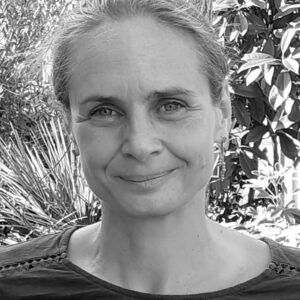 Andrea Révész is a Professor of Second Language Acquisition (SLA) at the IOE, University College London. Her main research interests lie at the interfaces of second language acquisition, instruction, and assessment, with particular emphasis on the roles of task, input, interaction, and individual differences in SLA. Currently, she is also working on projects investigating the neurocognitive processes underlying second language speaking and writing performance. Her work has appeared in international journals such as Applied Linguistics, Applied Psycholinguistics, Language Learning, Language Teaching, Studies in Second Language Acquisition, TESOL Quarterly, and The Modern Language Journal. She is co-winner of the 2017 TBLT Best Research Article Award and co-recipient of the 2018 TESOL Award for Distinguished Research. Currently, she serves as associate editor of Studies in Second Language Acquisition, co-editor of the John Benjamins Task-based Language Teaching series, and president of the International Association for Task-based Language Teaching (TBLT).
