

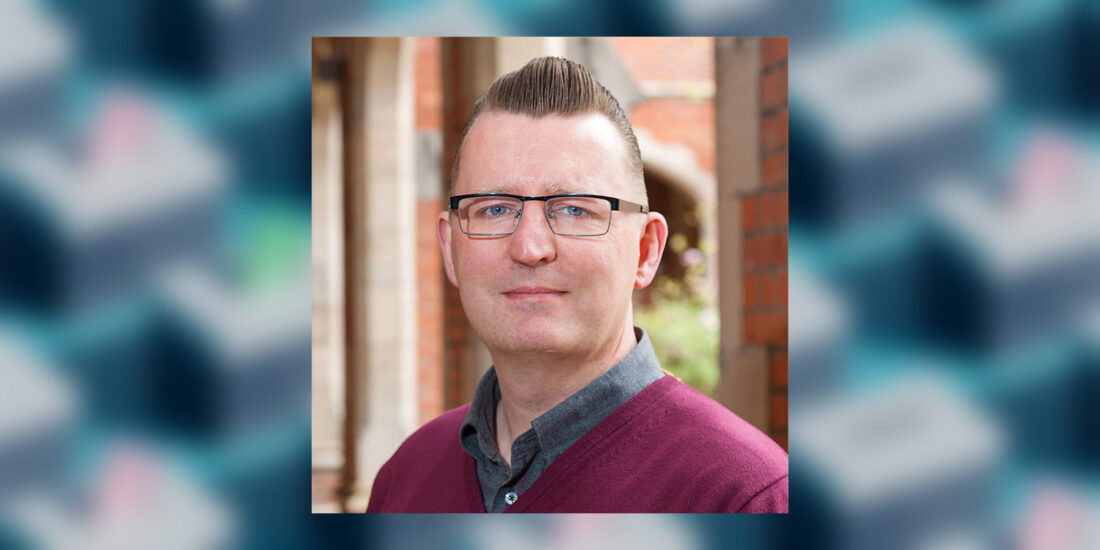
Professor Lee Jerome of the Middlesex University, United Kingdom, will present ‘What Can Teachers Do to Promote Democratic Citizenship?’ at The 14th European Conference on Education (ECE2026), The 14th European Conference on Arts & Humanities (ECAH2026), and The 6th European Conference on Aging & Gerontology (EGen2026), to be held in London, United Kingdom, and online.
Professor Jerome is a leader in citizenship education whose work focuses on democracy, children’s rights education, and the work of teachers. His talk will explore how teachers can help strengthen democracy by supporting young people’s democratic knowledge, civic engagement, and participation, and will feature international research and practical examples from schools.
This keynote presentation will be held both onsite in London and online via live-stream. To participate in ECE/ECAH/EGen2026 as an audience member, please register for the conference via the conference website.
The presentation will also be available for IAFOR Members to view online as part of their membership benefits. To find out more about becoming an IAFOR Member, please visit the IAFOR Membership page.
Speaker Biography
Lee Jerome
Middlesex University, United Kingdom
 Professor Lee Jerome has worked in secondary schools as a history and sociology teacher, in the charity sector running citizenship projects, and in universities teaching on a variety of courses from undergraduate to doctoral programmes. His main interests are linked to citizenship education, children's rights education, and the work of teachers. He is editor of the academic journal Education, Citizenship and Social Justice and his books include England’s Citizenship Education Experiment (2012), Children’s Rights Education in Diverse Schools (2021 with Hugh Starkey), Votes at 16 (2025 with Ben Kisby) and Educating for Citizenship (forthcoming). Professor Jerome’s recent projects include leading a group of student researchers to develop proposals for the national curriculum review in England, a 3-year student survey of citizenship education in secondary schools, and an international project to explore student-led approaches to learning about divisive contemporary issues.
Abstract

What Can Teachers Do to Promote Democratic Citizenship?
This lecture argues that teachers are uniquely placed to help defend democracy and considers what we can reasonably expect teachers to do and what the evidence suggests about their chance of success. The presentation will start with a brief outline of some of the key contemporary challenges and explore how teachers can exercise agency, even within constrained policy environments. Drawing on a review of the international research literature and recent survey evidence, the presentation will demonstrate that education can strengthen young people’s knowledge and understanding of democracy; their ability to engage in deliberative dialogue; and their willingness to act as active citizens. The session will end with some examples of how schools can support these outcomes through classroom practice, whole-school culture, and community engagement, suggesting that such positive outcomes can be achieved within existing curriculum and policy constraints in many countries.
